King Charles North Yorkshire Tour: 7 Powerful Moments of a Historic Royal Visit
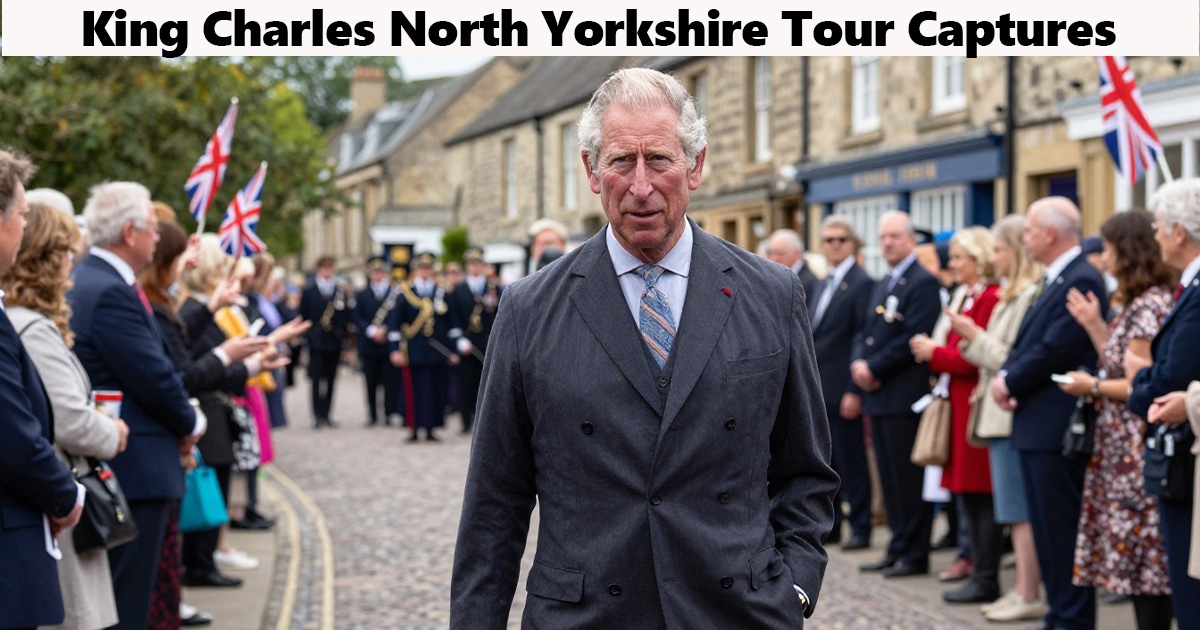
King Charles North Yorkshire Tour began like any other royal engagement on paper—but quickly turned into something far more memorable on the ground. Across four historic towns, crowds gathered, flags waved, and a quiet sense of excitement filled the streets as the King moved through one of England’s most scenic counties.
What made this visit stand out wasn’t just the royal presence—it was the atmosphere. Despite massive security operations, road closures, and large public turnouts, the entire King Charles North Yorkshire Tour unfolded smoothly with a remarkable outcome: zero arrests.
From emotional hospital visits to centuries-old castles and bustling market streets, this royal journey felt personal, grounded, and deeply human.
Overview of the King Charles North Yorkshire Tour
The King Charles North Yorkshire tour was designed as a multi-location engagement highlighting community, heritage, and public service.
The King visited:
- A hospice in a quiet market town
- A historic medieval city center
- A centuries-old castle overlooking a river valley
- A Victorian spa town known for its gardens and culture
Each stop reflected a different side of regional Britain. What tied them together was the warmth of public interaction and the carefully balanced security operation that supported the visit without overwhelming it.
Throughout the King Charles North Yorkshire tour, the King maintained his familiar style—calm, conversational, and attentive to small details that matter to people.
The Four Stops of the King Charles North Yorkshire Tour
The journey unfolded across four distinct locations, each with its own atmosphere and story.
Thirsk: Community and Care at the Heart
The day began in Thirsk, where the King visited Herriot Hospice Homecare.
Here, the tone of the King Charles North Yorkshire tour was deeply emotional. Nurses, volunteers, and families gathered to meet him. Conversations were quiet but meaningful, centered on care, support, and community resilience.
Key highlights:
- Meeting hospice staff and volunteers
- Private conversations with families
- A focus on end-of-life care support
This stop set a reflective tone for the rest of the day.
York: Crowds, History, and High Energy
Next came York, where the energy shifted dramatically.
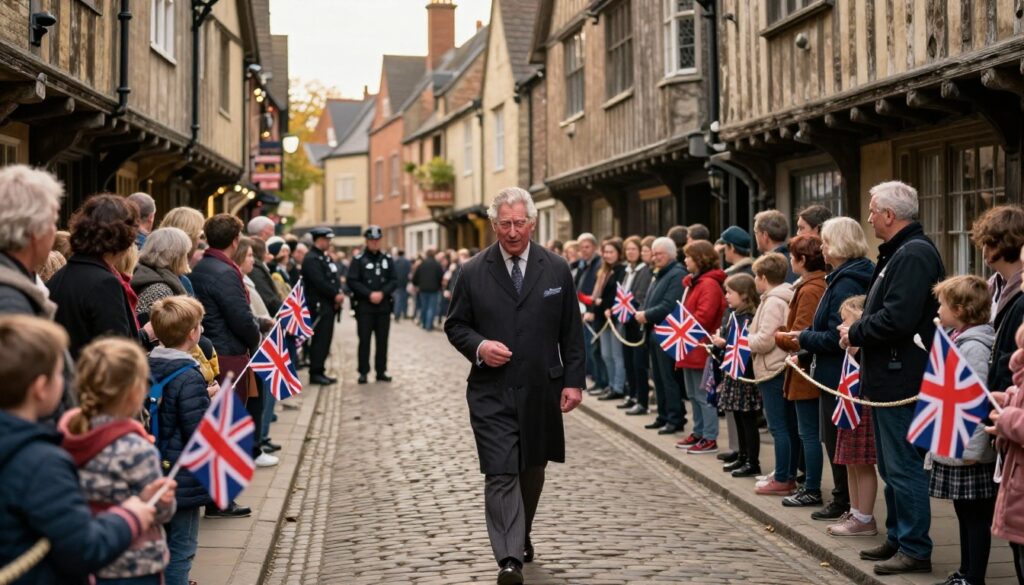
The King walked through the famous Shambles area, surrounded by medieval architecture and large crowds. Schoolchildren held handmade flags, and shopkeepers stepped outside to catch a glimpse.
During this stage of the King Charles North Yorkshire tour, interactions felt spontaneous:
- Conversations with local traders
- Greetings with school groups
- A relaxed walk through historic streets
York added a lively, almost festival-like atmosphere to the day.
Knaresborough: The Castle That Made History
One of the most symbolic moments of the King Charles North Yorkshire tour happened in Knaresborough at the medieval Knaresborough Castle.
This was historic for one key reason: no reigning monarch had visited the site before.
The King:
- Walked along ancient castle walls
- Spoke with historians and volunteers
- Greeted crowds overlooking the River Nidd
The reaction from the public was powerful—cheers echoed across the valley as the King appeared at the castle’s highest point.
This moment became the emotional peak of the entire King Charles North Yorkshire tour.
Harrogate: Gardens, Music, and Community Spirit
The final stop was Harrogate, a town known for its Victorian charm and green spaces.
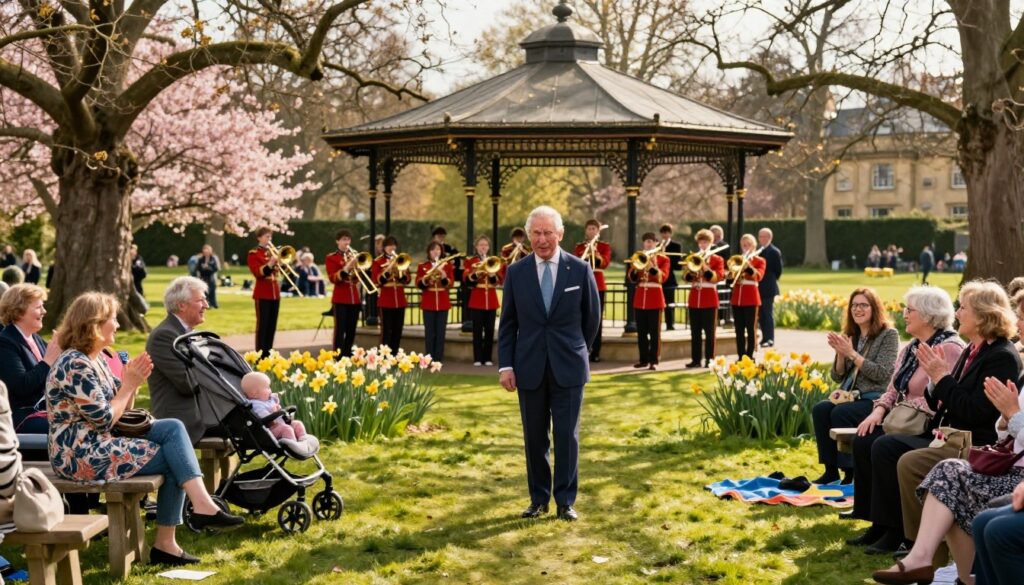
At Valley Gardens Harrogate, the King met festival organisers and watched a youth brass band performance.
The mood here was celebratory:
- Local music performances
- Community leaders and volunteers
- Relaxed public interactions in a park setting
It provided a gentle and uplifting ending to the King Charles North Yorkshire tour.
Security Behind the King Charles North Yorkshire Tour
A major talking point of the King Charles North Yorkshire tour was the scale—but invisibility—of the security operation.
North Yorkshire Police coordinated the visit with national security teams.
Security included:
- Uniformed officers on foot and horseback
- Plain-clothes surveillance teams
- Road closures across key areas
- Temporary drone restrictions
- Crowd monitoring systems
Despite this, the public experience felt smooth and uninterrupted.
What stood out most was the final result: zero arrests across the entire King Charles North Yorkshire tour, even with thousands of people gathering across multiple locations.
Public Reaction and the Significance of Zero Arrests
Public response to the King Charles North Yorkshire tour was overwhelmingly positive.
People described:
- A relaxed and friendly royal presence
- Easy access to viewing points
- A calm, celebratory atmosphere
The zero-arrest outcome highlighted:
- Effective coordination between agencies
- Positive crowd behaviour
- Strong community engagement
In modern royal engagements, this is often seen as a benchmark of successful planning.
Historical Context of Royal Visits in North Yorkshire
The King Charles North Yorkshire tour also fits into a long tradition of royal visits to the region.
King Charles III continues a legacy established by previous monarchs, including frequent visits by Queen Elizabeth II.
What makes the current approach different is tone:
- More informal interactions
- Strong focus on local charities
- Emphasis on cultural heritage and communities
Compared to earlier decades, today’s royal tours feel more accessible and less rigidly ceremonial.
Upcoming Royal Engagements
Following the King Charles North Yorkshire tour, the royal calendar remains active.
According to official planning from Buckingham Palace, upcoming engagements include:
- Trooping the Colour ceremony
- A state banquet for visiting international leaders
- Royal Ascot attendance
- Regional visits across England
- Commonwealth-related duties for senior royals
This continuity shows that the King Charles North Yorkshire tour is part of a wider, structured public engagement schedule rather than a standalone event.
About the Author