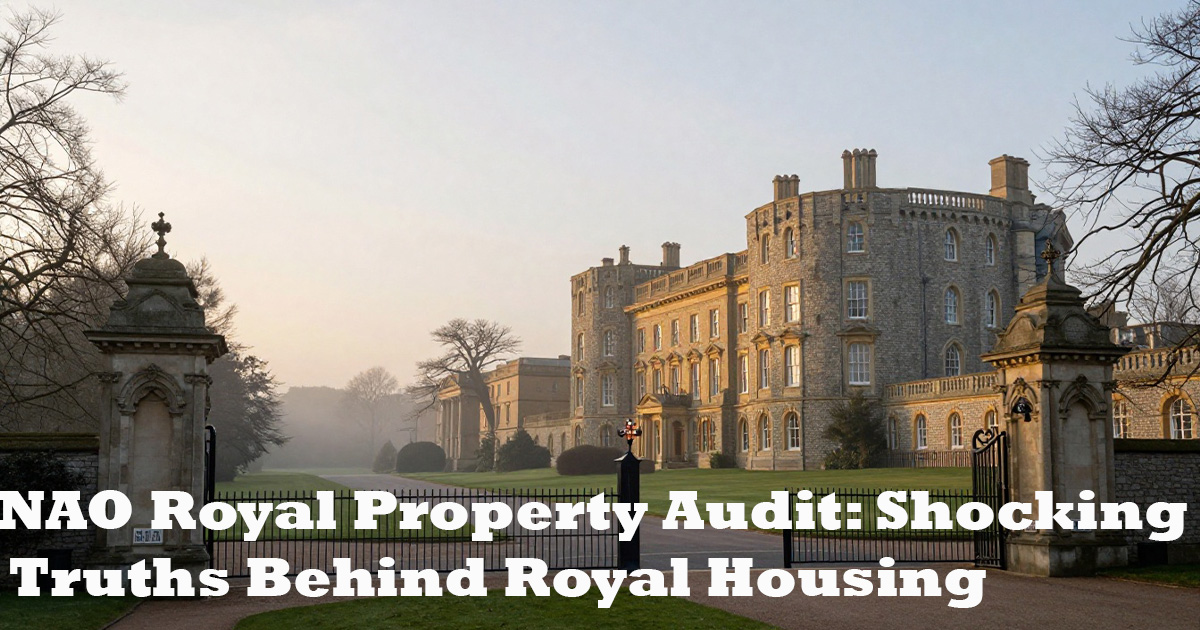
NAO Royal Property Audit: 7 Shocking Truths Exposed
The NAO royal property audit has landed with the kind of impact that rarely comes from a government report. It is long, detailed, and surprisingly blunt about how royal housing is structured in the UK. Most importantly, it raises one uncomfortable question: how much of the royal living system is actually funded—directly or indirectly—by the public?
For years, royal residences have been wrapped in tradition, secrecy, and “historic arrangements.” But this audit strips away the softness. What it reveals is a complex network of leases, subsidies, peppercorn rents, and arrangements that feel increasingly out of step with modern Britain.
Table of Contents
Introduction to the NAO royal property audit
The NAO royal property audit released by the National Audit Office is not just another bureaucratic document. It is a 78-page deep dive into how royal homes are financed, managed, and distributed.
At the center of it all is the Crown Estate, which oversees large parts of the UK’s royal property portfolio. The report doesn’t accuse anyone of wrongdoing, but it does something arguably more powerful—it lays out the numbers clearly.
And once you see those numbers, it becomes harder to ignore the scale of the system.
What the NAO royal property audit actually found
The NAO royal property audit documents at least a dozen properties linked to the York branch of the royal family alone. It also highlights:
- Peppercorn rents (sometimes effectively zero rent)
- Discounted lease arrangements
- Renovation spending close to £400,000 on select properties
- Sublet arrangements generating private income
- Long-standing “grace-and-favour” housing deals
One of the most striking aspects is simply the volume. This is not about one or two homes—it is a structured ecosystem of residences stretching across London and beyond.
The audit brings together information that was previously scattered, informal, or not publicly visible in one place.
The Prince Andrew housing controversy
No part of the NAO royal property audit generated more attention than the section involving Prince Andrew.
The report highlights his long-term arrangement at Royal Lodge, including a controversial lease structure that allowed him to sublet cottages within the estate.
For years, he paid minimal rent on the main property after a large renovation investment. Meanwhile, subletted cottages reportedly generated income that went directly to him.
That combination—low occupancy cost and private income potential—has triggered strong reactions in Westminster.
Former minister Norman Baker described the arrangement as unacceptable in modern public life.
The audit notes that the cottages are now empty, but the financial legacy of the arrangement still raises questions about transparency and fairness.
The York sisters and “adjusted rent” arrangements
Another major focus of the NAO royal property audit is the housing of Princess Beatrice and Princess Eugenie.
Both live in high-profile royal residences, including apartments within Kensington Palace and St James’s Palace.
Their rents are described as “adjusted,” a term that sounds neutral but hides a complicated funding structure. According to the audit, the payments are covered through arrangements tied to the Duchy of Lancaster.
Officials argue this does not involve taxpayer money directly. Critics argue it still represents public-value assets being used for private benefit.
The truth, as always, sits somewhere in between—but the lack of clarity is exactly what the audit highlights.
Forest Lodge and renovation costs
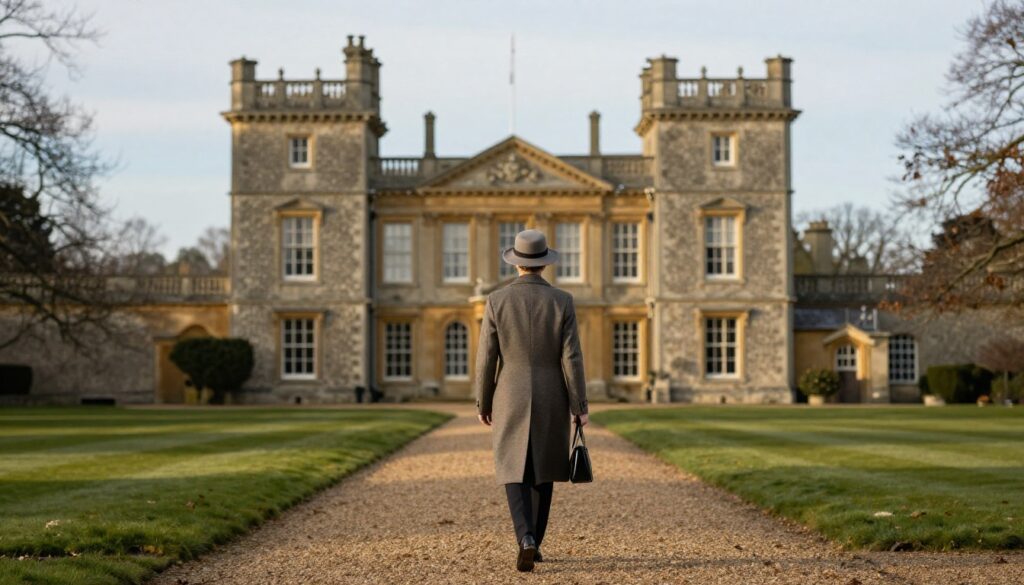
The NAO royal property audit also shines a spotlight on Prince William and Catherine, Princess of Wales, particularly their move to Forest Lodge.
Before they moved in, nearly £397,000 was spent on structural upgrades. These are described as landlord improvements, not luxury refurbishments—but the distinction matters less to public perception than it does on paper.
The couple now reportedly pays a market-based rent under a long-term lease. Internal refurbishments are covered privately, which helps separate personal spending from estate management.
Still, the fact that these figures now appear in an official audit is significant. It marks a shift toward transparency that did not exist before.
The wider royal housing system exposed
Beyond headline names, the NAO royal property audit uncovers a much larger system that most people never see.
For example:
- Bagshot Park operates under a long lease structure dating back decades
- Thatched House Lodge is rented at extremely low annual cost
- Princess Alexandra benefits from historically fixed arrangements
- More than half of royal housing units are staff accommodation tied to pension-linked rent formulas
This system isn’t new. In fact, many of these arrangements date back generations. What is new is the level of documentation.
The audit effectively maps out a housing system that blends private family use, historic privilege, and public estate management in a way that is difficult for outsiders to decode.
What happens next in Westminster
The NAO royal property audit is not the end of the story—it is the beginning of a political process.
The Public Accounts Committee is expected to question officials from both the Crown Estate and royal household structures in the coming weeks.
A key issue will be transparency. Another will be accountability. And a third—less spoken but equally important—is public perception.
Because while the Palace may argue that everything is technically lawful and historically grounded, public expectations are shifting. Housing costs are rising across the UK, and anything involving subsidised or unclear housing arrangements attracts scrutiny.
Buckingham Palace has said it welcomes clarification and contextualisation. That phrasing is standard—but it signals awareness that the conversation is not going away.
Final thoughts on the NAO royal property audit
At its core, the NAO royal property audit is not just about buildings. It is about systems, fairness, and transparency.
It shows a housing structure built over centuries, still operating with layers of tradition that do not always translate cleanly into modern expectations. Some arrangements are clearly administrative. Others feel symbolic. A few sit uncomfortably in between.
What the audit achieves most of all is visibility. And once systems become visible, they inevitably become debatable.
The conversation now shifts from “what exists” to “what should exist.” And that is where the pressure will continue to build.
Because housing—royal or not—is no longer just a matter of history. It is a matter of public trust.
About the Author