Discover 5 powerful lessons from Prince Andrew’s stunning royal downfall — exploring the decisions, scandals, and consequences that reshaped the monarchy.
Introduction: The Fall That Shook the Palace
The name Prince Andrew once symbolized prestige, duty, and royal tradition. As the second son of Queen Elizabeth II, the Duke of York was born into privilege. For decades, he represented the monarchy on official tours and military ceremonies. Yet, behind the grandeur, his world was quietly unraveling.
When Buckingham Palace confirmed that Prince Andrew had been stripped of all royal titles, it marked one of the most dramatic moments in modern royal history. The decision wasn’t just administrative—it was symbolic, historic, and irreversible.
This is not simply the story of a man losing his titles. It’s the story of power, accountability, and the shifting values of a monarchy under public scrutiny. Here are five powerful lessons from Prince Andrew’s royal downfall that continue to echo across Britain and beyond.
The Rise and Fall of Royal Prince Andrew
From Hero to Headline: The Turning Point
Prince Andrew was once celebrated as a war hero. His service during the Falklands War earned him admiration and cemented his image as a loyal patriot. For years, he enjoyed a life of privilege—public duties, global travel, and royal respect. But fame can be fleeting, and legacy fragile.
The turning point came when his name surfaced in connection with Jeffrey Epstein, the disgraced financier accused of sex trafficking. What began as speculation soon spiraled into one of the most damaging scandals ever to hit the British monarchy.
The BBC Newsnight interview in 2019 was meant to clear his name, but instead became the catalyst for his undoing. His tone-deaf remarks—especially the infamous line “I don’t sweat”—turned public opinion sharply against him. The monarchy, already facing modern pressures, had no choice but to distance itself.
How Public Perception Shifted Against the Duke of York
The public’s faith in the royal family depends on trust, transparency, and moral example. Prince Andrew’s inability to display empathy or accountability during the interview struck a nerve. He seemed detached from the gravity of the allegations, reinforcing the image of privilege over principle.
Social media amplified outrage. Memes, headlines, and editorials flooded the internet. The monarchy, which often relies on silence and dignity, suddenly faced a credibility crisis. What once felt untouchable now looked human, flawed, and vulnerable.
Within weeks, his public roles were suspended. Charities quietly removed his name. And in a move few thought possible, the Queen herself—the monarch who had always stood by family—agreed to strip Prince Andrew of his royal duties and titles.
Reputation Can Collapse Overnight
Reputation is a fragile currency. For royals, it’s the foundation of authority. Prince Andrew’s downfall proved that even centuries of lineage cannot shield someone from the consequences of public mistrust.
The Power of Public Trust in Modern Royalty
In today’s digital era, perception spreads faster than truth. The public no longer waits for palace statements—they form opinions through clips, tweets, and commentary. When trust breaks, it shatters entirely.
For Prince Andrew, years of goodwill vanished in mere hours—his silence and refusal to take accountability fueled speculation. The lesson is clear: in leadership—royal or otherwise—reputation is earned daily through humility, honesty, and service.
Even a prince must understand that status is temporary, but integrity is eternal.
Accountability Knows No Rank
Traditionally, royal figures operated above public reproach. Yet the modern world demands equality before justice. Prince Andrew’s removal demonstrated that royal privilege has limits, especially when public confidence is at stake.
Why Even Royals Face Consequences in Today’s Age
The monarchy’s survival depends on relevance. A system rooted in heritage must adapt to contemporary ethics. When the accusations surrounding Prince Andrew grew impossible to ignore, Buckingham Palace faced a moral dilemma: protect the institution or protect a son?
King Charles III’s decision to formally revoke his brother’s titles sent a powerful message—no one, not even a prince, is above accountability. It was a historic and painful step, but one necessary for the monarchy’s moral survival.
In a society demanding transparency, the royal family could no longer afford to act behind closed doors. The era of silent protection had ended.
Silence Can Be More Damaging Than Words
When crisis strikes, silence can sometimes signal guilt. Throughout the controversy, Prince Andrew’s prolonged silence allowed the narrative to shape itself without his voice.
The Palace’s Communication Missteps Explained
From the moment the scandal broke, the Palace chose restraint. While silence was once the royal family’s most excellent defense, it became their most significant liability. The lack of clear communication left a vacuum that tabloids eagerly filled.
In an age of social media transparency, strategic communication is key to survival. Had the Palace addressed the issue with empathy and honesty, the public might have responded differently. Instead, the silence felt cold—proof to many that the monarchy was out of touch.
The lesson? Silence protects tradition, but clarity preserves trust. The royal brand thrives not on secrecy but on sincerity.
Family Loyalty vs. Public Duty
The most challenging part of this story lies not in the headlines but in the palace corridors. Behind closed doors, this was a family crisis as much as a national one.
How King Charles Balanced Blood and Responsibility
As monarch, King Charles III inherited not just the Crown but also the duty to safeguard the monarchy’s image. Stripping his own brother of titles required emotional strength and constitutional precision.
The King’s decision was not an act of vengeance—it was an act of preservation. The monarchy could not afford to appear lenient toward scandal while demanding moral authority from the public.
Even Queen Elizabeth II, before her passing, made the painful choice to remove her son’s patronages. It was a rare glimpse into how deeply the royal family prioritizes duty over blood.
Loyalty to family remains sacred, but the monarchy’s loyalty to the people must always come first. This delicate balance defines leadership in the modern age.
The Enduring Impact on the Monarchy
Prince Andrew’s demotion reshaped public perceptions of the monarchy. Once symbols of tradition and virtue, royals are now seen as individuals subject to human flaws.
What Prince Andrew’s Fall Means for the Future of the Crown
The consequences go far beyond one man’s loss of title. The monarchy is undergoing a quiet transformation—from inherited privilege to accountable leadership. Every scandal, every decision now influences its survival in a world skeptical of hierarchy.
King Charles’s handling of the issue marked a turning point. His decisiveness signaled a monarchy ready to adapt, willing to act—even when it hurts.
Public confidence in the Crown may have wavered, but its resilience depends on transparency. Prince William and Princess Kate have embraced this shift, focusing on accessibility, authenticity, and purpose.
Prince Andrew’s downfall will serve as a cautionary tale for future generations of royals. The monarchy’s new motto might well be: earn your respect daily, or lose it overnight.
The Emotional Cost of the Downfall
Behind the pomp and politics lies an intensely human tragedy. Prince Andrew lost not only his titles but also his identity. The man once called “His Royal Highness” now lives in quiet seclusion, stripped of military honors and royal engagements.
For his daughters, Princess Beatrice and Princess Eugenie, the scandal cast long shadows. They’ve remained loyal yet distanced, navigating public life with dignity while shielding their families from renewed scrutiny.
In many ways, Prince Andrew’s story is also about redemption denied—a life once gilded by royal privilege now confined by its consequences. His silence continues, but the echoes of his fall remind Britain that, no matter how inherited, reputation must still be earned.
How the World Reacted
The international reaction to Prince Andrew’s title removal was swift and unforgiving. British tabloids dissected every angle, while American and European media painted his downfall as inevitable.
Social movements calling for institutional transparency saw it as a victory for accountability. Others mourned the erosion of royal mystique. In either view, the moment marked a cultural shift: the monarchy was no longer immune to the exact moral expectations as everyone else.
The Palace’s careful wording—“His Royal Highness will continue not to use the style”—was diplomatic but clear. The world understood its meaning. The “Prince” was gone. Only Andrew Mountbatten-Windsor remained.
Historical Context: When Royals Lose Their Titles
Prince Andrew is not the first royal to face demotion. History recalls others—like King Edward VIII, who abdicated for love, or Princess Diana, whose HRH title was removed after divorce. Yet, Andrew’s case stands apart because it was rooted in public ethics rather than personal choice.
This moment signaled evolution within an ancient institution. For centuries, royal titles symbolized divine right. Today, they symbolize earned responsibility. The monarchy is no longer untouchable—it is accountable to the people it serves.
As society evolves, so must its symbols. Prince Andrew’s story might feel tragic, but it’s also a testament to progress—a reminder that no name, no crown, no birthright can outweigh public trust.
Final Thoughts: Lessons Beyond the Palace
The downfall of Prince Andrew transcends royalty—it mirrors every system built on image over integrity. His story reminds us that reputation is both armor and mirror: it protects until it cracks.
Lessons the Royal Family and the Public Can Learn
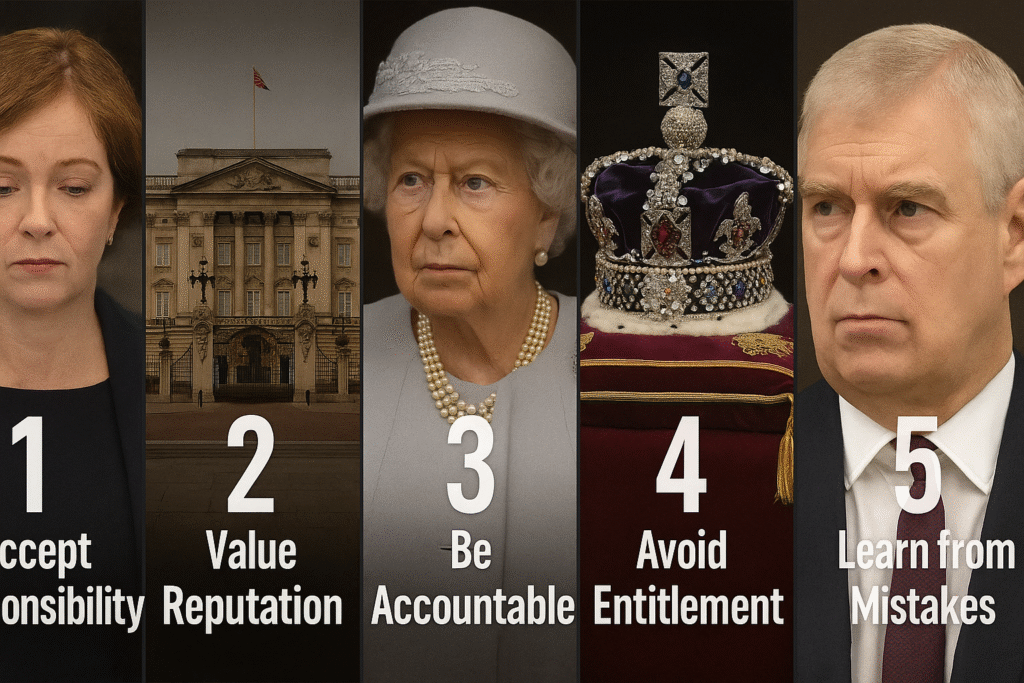
- Transparency triumphs over secrecy. The monarchy must continue to evolve in how it communicates with the people.
- Privilege carries responsibility. Public figures, no matter their title, owe society accountability.
- Silence is costly. Leaders must address crises with empathy and honesty.
- Leadership means sacrifice. Sometimes loyalty to a greater cause outweighs personal bonds.
- Legacy is earned, not inherited. Genuine respect cannot be passed down—it must be lived every day.
Prince Andrew’s royal downfall will forever stand as a warning—and a lesson. Power without integrity crumbles; silence without truth isolates. But transformation, however painful, breathes new life into even the oldest institutions.
And so, amid the gilded halls of Buckingham Palace, one truth now reigns supreme: the Crown endures not because it is powerful, but because it learns.
For more information: Prince Andrew loses military titles and use of HRHhttps://www.bbc.com/news/uk-59987935
5 Remarkable Ways William & Kate Protected Their Family
About the Author