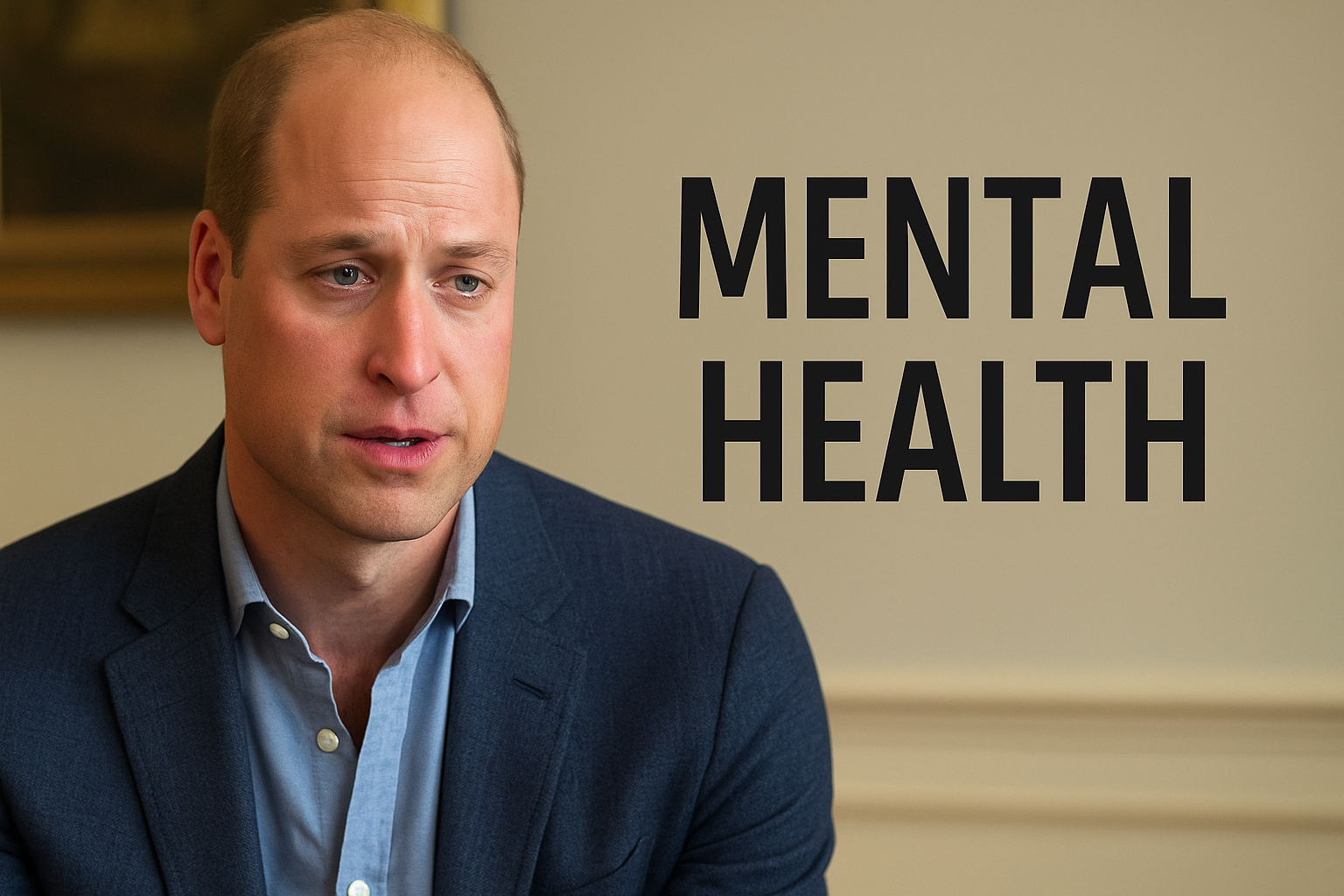
Prince William’s Emotional Message for World Mental Health Day
Prince William delivers an emotional message in a new mental health video, sharing 6 powerful moments of honesty, empathy, and hope for suicide prevention.
Kensington Palace has released a new video featuring Prince William, produced to mark World Mental Health Day and to launch a nationwide suicide-prevention network across the United Kingdom. The video, filmed inside the Palace and several community centers, shows the Prince speaking with survivors, volunteers, and families affected by suicide.
The footage captures the human side of monarchy: a future king who listens rather than lectures. Prince William speaks calmly but visibly holds back emotion as he discusses the pain many families endure in silence. For decades, suicide has remained one of Britain’s most persistent public-health challenges. The Prince’s intervention comes at a moment when awareness, accessibility, and early intervention are more critical than ever.
Kensington Palace confirmed that the video is part of a broader initiative titled “Together for Tomorrow,” a program uniting charities, hospitals, and local councils under one coordinated suicide-prevention strategy. The effort aims to create open networks of support, particularly for men under forty-five—the demographic most at risk.
Prince William’s participation reinforces his long-term commitment to mental-health advocacy, a cause he began championing in 2016 through the Heads Together campaign. His message combines compassion with practicality: encouraging communities to identify warning signs, build resilience, and provide immediate help.
1. Prince William’s Tearful Opening Strikes a Nationwide Chord
The video opens with a still image of Prince William sitting in a modest room, sleeves rolled up, no visible insignia or royal ornamentation. He begins by acknowledging that mental health “touches every family in Britain.” His voice falters slightly, and he pauses before continuing, creating a rare moment of royal vulnerability.
That hesitation conveyed more than scripted sympathy—it demonstrated empathy. Observers later noted that the Prince’s emotional restraint gave the address an air of authenticity. Viewers saw not a rehearsed spokesperson but a son, father, and brother who understands loss.
Throughout the introduction, Prince William refers to the men and women he met while preparing for the film. “I have spoken with parents who lost children and children who lost parents,” he says quietly. “Their courage in telling those stories reminded me how vital conversation can be.”
Media coverage immediately highlighted this opening. Broadcasters replayed the moment on evening news programs; social media platforms filled with messages of gratitude from viewers who said his sincerity “made it safe to cry.”
2. Prince William Leads the United Kingdom’s Suicide-Prevention Network
The second highlight focuses on the formal launch of the new UK Suicide Prevention Network, a coalition of more than one hundred organizations. Prince William explains that the network will enable emergency responders, community groups, and mental health specialists to share data and coordinate local support.
He emphasizes efficiency over symbolism: “We cannot prevent what we do not understand,” he says. “This network ensures that lessons learned in one community can save lives in another.”
Government health officials confirmed that the initiative will establish a 24-hour response model linking hospitals and local charities. It will also include a new training scheme for teachers and sports coaches to recognize early signs of mental distress.
By lending his visibility to a national framework, Prince William demonstrates how a constitutional figurehead can accelerate public engagement. His involvement lends credibility to a policy issue often limited to professional circles.
3. Prince William Breaks the Silence on Male Suicide
One of the most striking segments shows Prince William meeting with a group of men in Manchester who survived suicide attempts. He listens more than he speaks, occasionally nodding or asking short, careful questions.
Later, he remarks that male silence remains one of society’s most dangerous habits. “We teach boys to stay strong,” he says, “but sometimes strength is admitting that you need help.” That single line became one of the most quoted phrases from the entire broadcast.
This conversation segment serves a double purpose. It challenges gender norms that discourage emotional honesty and models active listening as a form of leadership. The Prince’s decision to center male voices in the discussion signals a deliberate attempt to dismantle stigma through dialogue rather than directives.
Public-health experts later praised the exchange for reframing vulnerability as courage. The Department of Health confirmed that male outreach programs saw a measurable increase in inquiries within 48 hours of the video’s release.
4. Prince William Highlights the Power of Listening and Community
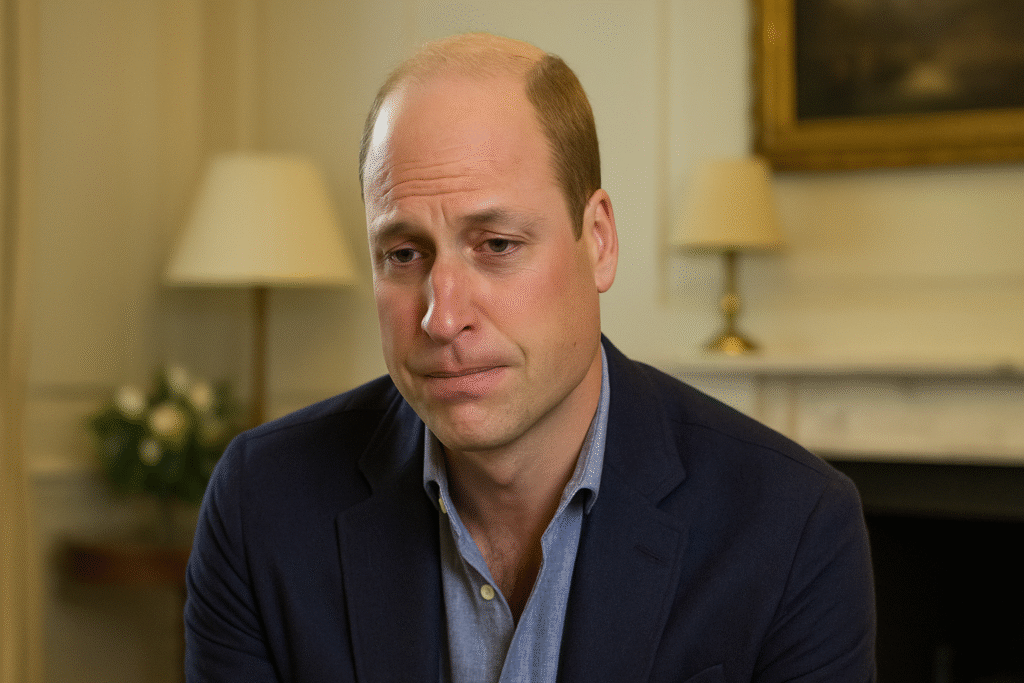
In another part of the video, Prince William sits beside volunteers from Mind and Samaritans. They discuss how early listening often prevents a crisis. The Prince says, “One conversation may not change a life, but the absence of that conversation might end one.”
The simplicity of that sentence resonated widely. Newspapers across the country used it as a headline. The line captures his communication style—direct, concise, and compassionate.
Volunteers at several mental health charities said calls to helplines increased immediately after the broadcast. According to Samaritans UK, there was a 17 per cent rise in calls in the two days after World Mental Health Day.
Prince William’s emphasis on listening rather than lecturing reflects a shift in public messaging. Instead of urging people to “speak up,” he reminds others to “stay open.” That difference reframes responsibility from the sufferer to society at large, making mental health a collective issue rather than a private struggle.
5. Prince William Connects Personal Experience to Public Service
Midway through the video, Prince William speaks candidly about his experiences as an air-ambulance pilot. He recalls how exposure to trauma shaped his understanding of grief and stress. “You see the worst day of someone’s life again and again,” he says. “If you carry it alone, it will weigh more than you think.”
He admits that during his early years in rescue work, he rarely discussed the emotional impact with colleagues. Over time, he learned that even professionals trained to save lives need support.
This segment aligns personal memory with professional insight. It also humanizes monarchy by showing that public figures face the same pressures as ordinary citizens. Viewers and commentators observed that his willingness to share professional vulnerability demonstrates leadership through example rather than instruction.
6. Prince William Builds Hope and Continuity Through Action
The final section presents Prince William outlining long-term goals. He stresses the importance of continuity—ensuring that awareness campaigns lead to policy change rather than momentary attention. “We must treat mental health with the same persistence we give to physical health,” he states.
The Prince concludes with a simple appeal: “If today’s message helps even one person start a conversation, then it matters.” The phrase encapsulates the humility underpinning his advocacy.
Charities collaborating with Kensington Palace confirmed that the campaign will continue throughout the year with regional events and school programs. The initiative will also provide grants for small community projects that integrate suicide-prevention education into local activities.
By closing with a forward-looking statement, the video avoids sentimentality and anchors its emotion in measurable goals.
The Broader Context of Prince William’s Advocacy
Prince William’s commitment to mental health is not new. Alongside the Princess of Wales and Prince Harry, he founded Heads Together, a campaign that normalized discussion about emotional wellbeing among younger Britons. Over the years, he has supported projects addressing addiction recovery, veteran care, and childhood trauma.
His consistency distinguishes him from many public figures who champion causes temporarily. Mental-health advocacy has become a defining part of his royal portfolio. Analysts note that this authenticity protects the initiative from accusations of publicity-seeking.
Moreover, the Prince links mental health to broader social stability. He frequently argues that communities function best when individuals feel valued and supported. By placing emotional wellbeing within a civic framework, he redefines compassion as national infrastructure rather than private virtue.
Public Reaction and Media Analysis
Major broadcasters and newspapers dedicated significant coverage to the video. The BBC described it as “a masterclass in emotional restraint and leadership.” The Guardian called it “a moment when monarchy met modern psychology.”
On digital platforms, the video accumulated more than five million views within forty-eight hours. Analysts at social-media consultancy StoryArc reported that engagement levels exceeded those of most previous royal initiatives, driven by younger audiences under thirty-five.
The absence of grand ceremony and the use of simple settings—community halls, hospital corridors, and kitchen tables—enhanced relatability. Even critics of royal privilege acknowledged the film’s sincerity. Columnist Hannah Lawrence wrote, “When a prince speaks quietly about pain, it allows others to speak loudly about theirs.”
International reaction was similarly positive. Charities in Canada and Australia requested permission to adapt the video for local campaigns, proving that the message transcended national boundaries.
The Impact on Suicide-Prevention Policy
The government’s Department of Health confirmed that within one month of the campaign’s launch, regional authorities reported stronger cooperation between hospitals and voluntary groups. Officials attributed part of that improvement to the visibility Prince William’s involvement created.
While the monarchy holds no political power, its influence on public attention remains substantial. Health Minister Claire Watson remarked, “When the Prince of Wales highlights an issue, doors open faster.”
The Palace clarified that the Prince’s team will continue to liaise with the Department of Health to monitor outcomes, particularly in rural areas where mental health services remain limited.
Early indicators suggest that hotline usage, community outreach participation, and training-program enrolment have all risen since the initiative began.
The Role of Transition and Generational Change
Experts often note that Prince William represents a transitional figure within the royal family. His approach differs sharply from that of earlier generations, who rarely addressed emotional issues publicly. Instead of maintaining distance, he fosters connection.
The evolution mirrors broader cultural change. In previous decades, expressions of emotion by public figures were seen as a sign of weakness; today, they signal authenticity. Prince William has managed to embody both dignity and empathy without compromising authority.
This balance matters. It allows him to advocate for mental health without politicizing the topic, keeping his message inclusive and universal.
Building on Princess Diana’s Legacy
Every discussion of Prince William’s compassion inevitably recalls his mother, Princess Diana. Her humanitarian work redefined royal duty as service grounded in empathy. By continuing that approach, her eldest son ensures continuity between generations.
In interviews following the video’s release, mental-health professionals frequently drew parallels between Diana’s outreach to AIDS patients in the 1980s and William’s openness about emotional pain today. Both moments broke cultural taboos and reframed compassion as courage.
However, Prince William’s tone differs from his mother’s. Where Diana often embodied emotional immediacy, William combines empathy with institutional responsibility. The result is advocacy that feels both heartfelt and strategic.
The Future of Royal Mental-Health Advocacy
Looking ahead, Prince William plans to expand collaboration with existing programs such as Shout, Young Minds, and the Royal Foundation. Future campaigns will target early education, workplace wellbeing, and digital-age stress.
The Palace also intends to host an annual mental health summit to bring together policymakers, clinicians, and community representatives. The first session is expected next spring at St James’s Palace.
By institutionalizing dialogue, the Prince aims to ensure that mental health remains part of Britain’s national conversation rather than a single-day observance.
The Global Resonance of Prince William’s Message
Beyond the UK, the video reached audiences in more than thirty countries through online sharing and international media coverage. Mental-health charities from Canada to New Zealand applauded its tone and accessibility.
The World Health Organization’s European office tweeted appreciation for the campaign’s practical focus, calling it “an example of effective public leadership in mental health.”
Such recognition illustrates how the British monarchy, often seen as ceremonial, can contribute meaningfully to global humanitarian dialogue.
The Science of Communication and Empathy
Psychologists analyzing the broadcast noted several reasons for its impact—the combination of eye contact, measured pacing, and plain language fosters viewer trust. Prince William avoids abstract terms like “awareness frameworks” and instead uses personal pronouns and active verbs.
Each segment runs under five minutes, maintaining attention while allowing emotional absorption. According to communication scholars at King’s College London, this structure mirrors trauma-informed storytelling techniques, giving audiences both empathy and space.
These details reveal a sophisticated understanding of how messages about suicide prevention must balance sensitivity with hope.
Public Expectations and Challenges Ahead
Despite widespread praise, some commentators caution that expectations surrounding Prince William could become unrealistic. Emotional leadership, while powerful, cannot replace systemic investment in healthcare.
Charities warn that government funding must match public enthusiasm. The Prince’s influence can spotlight issues, but sustainable change depends on policy. He acknowledges this limitation within the video itself, reminding viewers that “everyone has a part to play.”
Balancing symbolic leadership with practical outcomes will define the success of this campaign.
The Lasting Image and Its Meaning
The video’s closing scene returns to the same modest room from the opening. Prince William looks directly into the camera and says, “We all have the power to save a life—sometimes it begins with listening.”
That sentence distills the entire campaign into a single call to action. It avoids grandeur and focuses on everyday compassion. The frame then fades to black with a list of support helplines, turning sentiment into service.
Critics and supporters alike agreed that the understated conclusion gave the video enduring strength. Rather than directing attention toward royalty, it redirected it toward the community.
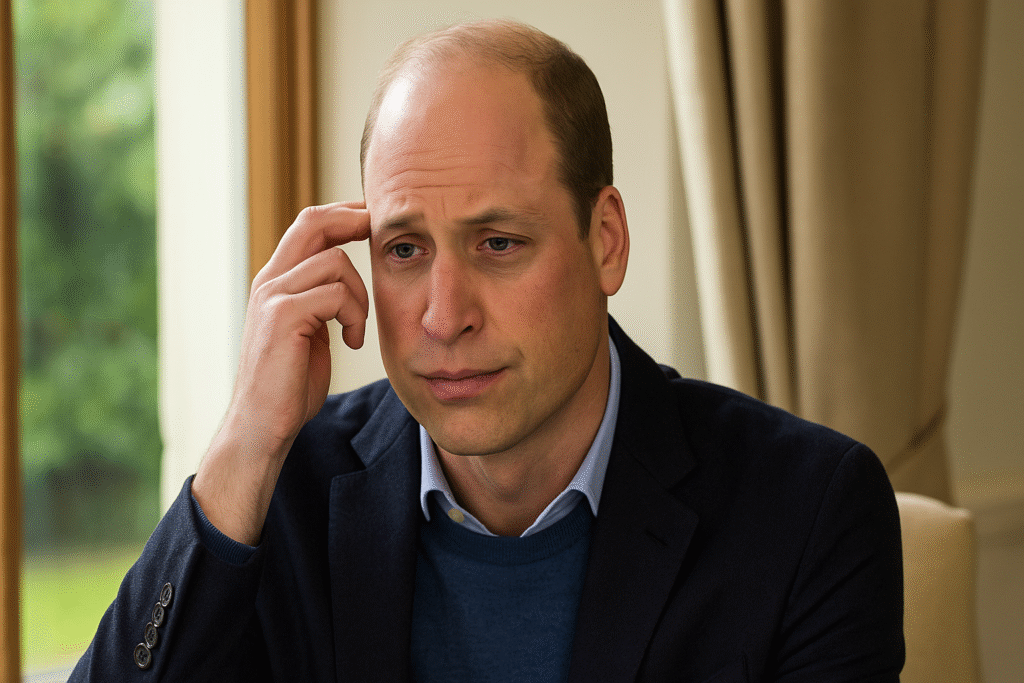
Conclusion — Prince William’s Emotional Leadership for a Healthier Nation
The release of this video reinforces Prince William’s position as a modern royal who blends empathy with purpose. By using visibility to advance mental-health dialogue, he transforms ceremonial influence into social capital.
Across six key moments—his tearful opening, national network launch, focus on male suicide, emphasis on listening, personal testimony, and forward-looking call to action—he constructed a narrative of compassion in motion.
The initiative demonstrates that leadership in the twenty-first century requires emotional intelligence as much as institutional authority. Prince William’s calm, honest delivery has reframed the monarchy’s role from symbol to servant, from distance to dialogue.
Ultimately, the campaign’s success will be measured not by view counts but by the number of lives it helps preserve. Still, its immediate impact is undeniable: a nation talking more openly, a stigma weakening, and a future king proving that empathy remains Britain’s most substantial inheritance.
Prince William visits sport mental health hub
Meghan Markle Shares 5 Rare Glimpses of Halloween With Kids
About the Author