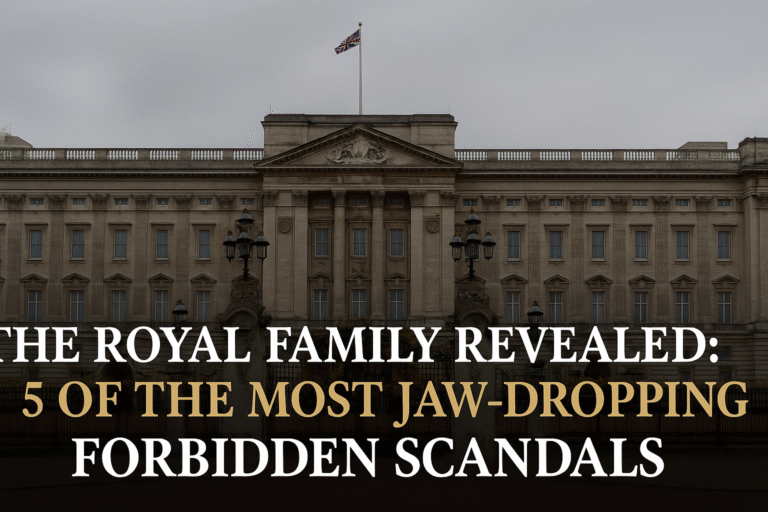
Royal Family Revealed: The Hidden Affair That Rocked the Palace
Royal Family Revealed — uncover five of the most shocking and forbidden scandals that changed the monarchy and stunned the world forever.
For generations, the British monarchy has projected an image of elegance, unity, and discipline. Yet when the royal family revealed its public face to the world, that image often hid secrets buried under layers of tradition and protocol. The monarchy’s legacy includes breathtaking acts of love, shocking betrayals, and painful lessons that forced change from within.
These stories aren’t merely tabloid material; they are historical case studies of how power, image, and human emotion collide. Each scandal reveals something fundamental about the royal institution: its fragility, its adaptability, and its humanity.
In this in-depth exploration, we revisit five forbidden scandals that shook the British royal family. Each one offers insight into how the monarchy survived the storms that could have ended it—and why its endurance continues to fascinate the world.
Royal Family Revealed: The Crown Versus Modern Values
The monarchy has always balanced two identities: a sacred institution and a human family. For centuries, that balance held strong, but modern times have rewritten the rules of royal life. The media revolution and global connectivity changed how people see privilege, morality, and leadership.
When the royal family revealed glimpses of private struggle, the world’s response shifted from awe to analysis. Citizens no longer treated the royals as untouchable; they expected accountability, empathy, and truth. What once qualified as scandal now functions as social dialogue.
Consider the 1990s—a decade of transition. Television interviews replaced royal decrees, and younger generations demanded authenticity. When members of the royal family expressed pain, loss, or frustration publicly, audiences didn’t recoil; they related. The monarchy learned that vulnerability could strengthen, not weaken, public trust.
This evolution hasn’t been easy. The same transparency that earns respect also invites judgment. Every gesture, every silence becomes news. Yet that relentless attention has forced the royals to adapt faster than any constitutional reform ever could.
In today’s Britain, the monarchy stands as both tradition and mirror. It reflects the nation’s changing expectations—its hunger for honesty, its struggle with legacy, and its enduring fascination with power wrapped in pageantry.
The true transformation began when the royal family revealed not perfection, but persistence—the courage to admit imperfection in an age of scrutiny.
Royal Family Revealed: The Hidden Affair That Rocked the Palace
Every royal generation carries at least one love story it would rather forget. This particular affair began quietly in the 1950s, at a time when the monarchy symbolized moral strength after the chaos of war. The young prince, burdened by royal expectations, sought freedom.
He met a woman far from the rigid world of court etiquette. She was intelligent, spirited, and utterly unfit for royal approval. Their meetings started innocently at charity events, but affection grew quickly. The couple exchanged letters, often smuggled through trusted aides.
When rumors reached the press, the Palace reacted with precision. Courtiers restricted the prince’s public appearances and reassigned him to overseas duties. The woman, overwhelmed by media attention, left the country.
Unlike modern scandals that explode overnight, this one faded slowly. The Palace never confirmed it, but insiders whispered about the heartbreak for decades. When the royal family revealed its official biography years later, the chapter on this prince skipped crucial details.
The lesson endured: secrecy could protect the crown, but it also destroyed personal happiness. Behind every ceremonial smile stood a life shaped by what the monarchy forbade.
Royal Family Revealed: The Secret Betrayal Behind Closed Doors
Trust sustains every institution, and betrayal can unravel it in an instant. In the late 1970s, a leak from within Buckingham Palace sparked chaos. Confidential letters and private conversations found their way to the front pages of British newspapers.
At first, officials suspected foreign interference. Later, investigators discovered something far more painful: the culprit worked inside the Palace. The betrayer handled correspondence, knew family routines, and attended private functions. The betrayal cut deep because it came from someone who was treated like family.
The exposure embarrassed senior royals, especially when reporters quoted personal remarks made in confidence. Meetings followed daily to contain the damage. Advisors argued about how much to reveal, while public opinion turned skeptical.
When the royal family revealed its statement, it avoided assigning blame and emphasized unity. Behind the scenes, they confronted the traitor privately. Dismissing them publicly would have fueled another scandal, so officials arranged a quiet departure.
The experience taught the monarchy a harsh truth: loyalty demanded more than service—it required moral restraint. After the incident, internal communications tightened, and background checks became routine. The crown learned that betrayal rarely comes from enemies—it often comes from trusted hearts.
Royal Family Revealed: The Scandal That Threatened the Crown
The third scandal arrived with modern media. In the 1990s, tabloids evolved into global watchdogs. Cameras surrounded every royal outing, and journalists dissected private lives with relentless curiosity.
A senior royal developed an association with a businessman whose reputation divided opinion. Initially, their partnership appeared charitable—fundraising dinners, public speeches, and foreign tours. Over time, the businessman’s dealings came under investigation. Allegations of bribery and corruption spread, and reporters linked the royal to these accusations through donations and favors.
When the royal family released its first response, it emphasized transparency. Financial documents went public, press briefings increased, and interviews attempted to humanize the situation. Yet the damage had already taken root.
British citizens began asking whether the monarchy remained relevant in an age of accountability. Politicians debated royal funding. Talk shows mocked the opulence of an institution facing ethical scrutiny.
Eventually, the royal at the center of the scandal withdrew from public duties. The Palace implemented strict ethical standards for all charitable partnerships. Over the next decade, transparency transformed from an optional virtue to an absolute necessity.
What threatened to end the monarchy instead redefined it. By confronting the crisis head-on, the royal family demonstrated resilience. It learned that silence breeds suspicion, while communication rebuilds trust.
Royal Family Revealed: The Forbidden Love Story Buried by Time
Few royal stories blend romance and tragedy as poignantly as the abdication crisis. Decades before televised interviews and streaming documentaries, a reigning monarch fell in love with an American divorcee. Their bond defied every royal expectation.
The government opposed the relationship. The Church of England declared that a divorced woman could never serve as queen. Advisors urged the king to end the affair quietly. But he refused.
In 1936, he made an announcement that stunned the world. “I have found it impossible,” he said, “to carry the heavy burden of responsibility without the help and support of the woman I love.”
That single sentence changed British history. When the royal family revealed the abdication, people lined the streets in disbelief. Some saw romance; others saw betrayal. For the first time, personal emotion outweighed constitutional duty.
The former king lived in exile, stripped of his titles but unbroken in love. Over the years, historians revisited the story with sympathy. What had once seemed scandalous now appeared courageous. The episode forced future generations to redefine royal marriage—not as a political alliance, but as a partnership of mutual choice.
Modern heirs now marry for love largely because one man refused to live without it. The forbidden romance, once branded as treachery, became a foundation for modern royal humanity.
Royal Family Revealed: The Cover-Up That Shook the Monarchy
The fifth scandal tested the Palace’s commitment to transparency in the digital age. During the early 2000s, a prominent royal charity faced scrutiny for financial irregularities. Donations earmarked for relief programs never reached their intended recipients.
As investigative journalists traced the money, discrepancies emerged. Leaked memos suggested poor oversight and questionable intermediaries. The public demanded accountability.
Initially, the Palace responded defensively. Officials emphasized the royal family’s independence from the charity’s operations. Critics interpreted that as avoidance. News outlets intensified their coverage, and global audiences began questioning royal ethics.
When the royal family revealed its full audit report, it marked a turning point. The findings acknowledged administrative negligence but denied direct involvement from senior royals. To repair credibility, the monarchy introduced independent oversight for all affiliated organizations.
The transparency effort restored partial trust, but scars remained. Financial donors became cautious. International charities insisted on stricter contracts.
The royal household adapted. It embraced external governance, invited auditors, and began publishing detailed annual reports. The process modernized the monarchy more effectively than any speech could.
Through this scandal, the royals learned that survival requires honesty—not perfection. Truth, even when painful, preserves the institution’s dignity.
Royal Family Revealed: Power, Privilege, and the Price of Silence
The most unsettling aspect of royal scandals often lies not in what happened, but in what remained unspoken. Silence has long served as the monarchy’s default defense. When tension arises, courtiers manage it with discretion. When rumors spread, the Palace responds with dignity rather than detail.
However, that restraint sometimes magnifies suspicion. When the royal family revealed partial truths or issued brief statements, the public often interpreted them as concealment. Silence, once noble, became dangerous.
The price of secrecy grows heavier with every generation. Younger royals face an audience that values conversation over ceremony. They understand that transparency builds credibility faster than polished statements. That realization has prompted an internal shift—from suppression to controlled disclosure.
The modern Palace now uses digital channels, open interviews, and personal documentaries to humanize its image. Rather than deny every controversy, it explains context, admits emotion, and acknowledges lessons learned.
Critics argue this openness risks eroding mystique. Supporters claim it secures the monarchy’s future. Both perspectives hold truth. By lifting the veil, the monarchy sacrifices some of its legend, yet gains a deeper connection to the people it serves.
Ultimately, silence once preserved royal dignity, but today communication preserves its survival.
Royal Family Revealed: The Media Storms That Changed Everything
The monarchy’s scandals have always existed, but the media has transformed their impact. In earlier centuries, rumors traveled through court gossip. By the late twentieth century, they became breaking news within minutes.
Journalists no longer waited for official statements. They speculated, published leaks, and forced reactions. The Palace could no longer control narratives through silence. To adapt, communication teams developed modern public relations strategies.
When the royal family revealed its responses to modern crises—divorces, controversies, and tragedies—the tone had shifted. Officials prioritized empathy and accessibility. Interviews replaced decrees.
The new approach bridged a widening gap between royalty and citizens. People began to see royals not as distant icons but as individuals facing emotional realities. While media scrutiny intensified pressure, it also humanized the monarchy.
This evolution turned communication into a survival tool. The crown learned that in an age of constant visibility, silence feels like guilt. Speaking directly, even imperfectly, fosters connection.
Royal Family Revealed: When Duty Collides with Desire
Inside palace walls, personal desires often collide with national duty. Every royal birth, wedding, and partnership carries political consequences. Tradition demands restraint, yet emotion defies rules.
Several lesser-known episodes illustrate this conflict. A duke who loved an artist quietly supported her career while denying any connection publicly. A princess secretly wrote essays under a pseudonym to express frustration over restrictive gender roles.
When the royal family revealed these private struggles decades later through declassified letters and authorized biographies, historians realized how emotionally complex the monarchy truly was. Duty had not erased individuality; it had only disguised it.
Such revelations shifted how the public perceives privilege. Instead of viewing royals as aloof figures, people began to see them as humans performing impossible roles under constant scrutiny. The difference between personal truth and public expectation became one of the monarchy’s central tensions—and one of its lasting fascinations.
Royal Family Revealed: The Public’s Changing Perception
Public reaction to royal controversies often reflects broader social change. In the 1950s, a moral scandal could ruin a dynasty; by the 2020s, honesty and openness earned respect.
When the royal family revealed its struggles—mental health battles, personal losses, and internal disputes—citizens responded with empathy. Younger generations saw transparency as strength, not weakness.
Polls showed fluctuating approval ratings, yet faith in the monarchy endured. People valued the idea of continuity even when individuals faltered. The crown’s symbolic power lay in its ability to represent endurance through crisis.
Royal historians note that each scandal forced necessary reform. The monarchy moved from secrecy to accountability, from isolation to accessibility. What once embarrassed the institution eventually made it stronger.
Royal Family Revealed: The Global Ripple Effect
Royal scandals rarely remain confined to Britain. The monarchy’s symbolism reaches former colonies, allied nations, and global institutions. When the royal family revealed its controversies, newspapers from New York to New Delhi amplified every word.
In Commonwealth nations, each headline reignited debates about constitutional ties and cultural identity. Some argued that royal missteps weakened their relevance abroad, while others saw them as reminders that even empires evolve.
Interestingly, royal transparency sometimes increased admiration internationally. When younger royals spoke about grief, mental health, or social inequality, audiences across continents felt empathy. Their willingness to confront difficult truths demonstrated that modern leadership requires vulnerability.
Global coverage turned the British monarchy into both a cautionary tale and a model of endurance. In revealing its flaws, it extended its influence beyond ceremony and into conversation—about morality, media, and modern governance.
Royal Family Revealed: The Lessons Behind the Scandals
Across centuries of triumph and disgrace, the monarchy’s most significant challenge has been authenticity. The five scandals illustrate how human nature exists even in the highest institutions. Desire, fear, and pride affect kings and queens as much as anyone else.
When the royal family revealed its vulnerabilities, the public discovered something valuable: the monarchy’s humanity—the shift from silence to sincerity rebuilt emotional connection.
Each crisis carried a lesson. The hidden affair reminded the Palace that emotional repression breeds rebellion. The betrayal scandal proved that unchecked access destroys integrity. The financial controversy highlighted the necessity of oversight. The abdication demonstrated courage, while the modern media era taught adaptability.
Today’s royals operate under intense visibility, yet they remain relevant because they continue to evolve. Openness has replaced austerity. Compassion has replaced distance. The monarchy’s endurance comes not from divine right, but from its willingness to grow.
Royal Family Revealed: Why Scandal Strengthens Legacy
Paradoxically, every major controversy that threatened the monarchy also fortified it. Crises stripped away illusion, forcing evolution. When the royal family revealed its missteps—whether through confession, reform, or quiet endurance—it proved that longevity depends on reinvention.
Scandal demands confrontation with truth. That confrontation renews institutions. The monarchy’s ability to learn publicly from private pain has transformed its role from ruler to reflector. It mirrors society’s own growth—the struggle between image and integrity, past and progress.
Future historians will likely argue that these forbidden stories preserved the monarchy by humanizing it. The institution that once ruled by silence now survives by speaking. Its history of scandal is not a stain; it is a record of adaptation.
Through exposure, the royals discovered resilience. Through criticism, they found humility. And through revelation, they gained relevance.
Conclusion
The fascination with royal scandals persists because it reveals a truth about power and humanity. When the royal family revealed its most painful moments, it did more than expose flaws—it reflected society’s evolution.
The Palace no longer hides behind walls of secrecy. Instead, it faces its past, learns from its mistakes, and engages with the world it represents. Transparency no longer threatens the crown; it protects it.
In the end, these forbidden stories are not simply tales of disgrace. They are chapters in an ongoing journey of redemption. Each scandal marks a step toward a more honest monarchy—one that survives not by perfection, but by its capacity to change.
The world continues to watch the British royal family with curiosity and criticism, but also with enduring respect. The monarchy’s ability to reveal, adapt, and persevere ensures that its story remains one of history’s most extraordinary.
5 Powerful Lessons from Prince Andrew’s Stunning Royal Downfall
About the Author