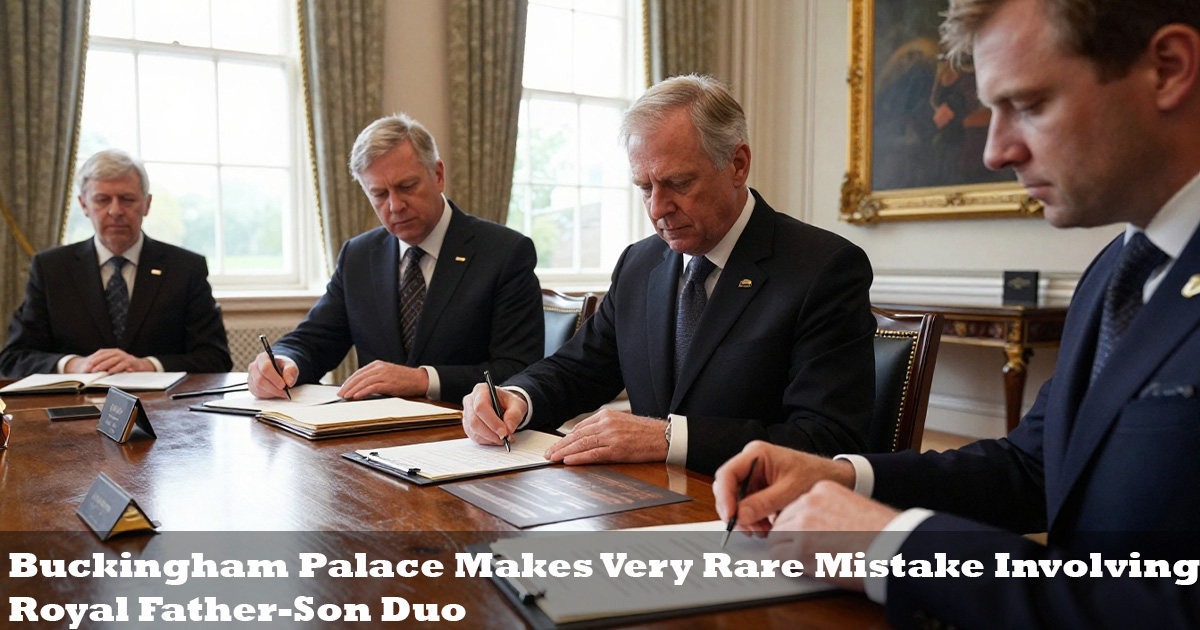
Court Circular Mistake is not a phrase royal watchers hear very often. The British monarchy values attention to detail and carefully manages its traditions and records.
In fact, this strong focus on accuracy is one of its defining features. As a result, a recent error in one of its most important official documents quickly became a talking point among royal experts and historians.
The mistake involved Prince Edward, the Duke of Edinburgh, and his son James, Earl of Wessex. However, royal staff quickly corrected the error.
Even so, the incident showed that even the most organized institutions can still make simple administrative slips.
What made this incident even more interesting was not just the mistake itself. Instead, it was where it appeared — in the Court Circular.
This document is widely regarded as one of the most accurate records maintained by the Royal Household.
Now, let’s explore what happened, why it matters, and what this rare royal mix-up reveals about modern monarchy operations.
Table of Contents
What Is the Court Circular?
Before we understand the Court Circular Mistake, it is important to first understand what the Court Circular is.
The Court Circular is the official daily record of royal engagements. In fact, it records public appearances, meetings, ceremonies, visits, military events, and other duties carried out by members of the Royal Family.
Think of it as the monarchy’s official diary.
Because of this role, historians, journalists, researchers, and royal fans use it to track royal activity. Therefore, accuracy is very important since it also serves as a historical archive.
In addition, every entry is carefully prepared and checked before publication. As a result, even a small mistake can attract attention.
Understanding the Court Circular Mistake
The recent Court Circular Mistake involved a military engagement at Catterick Garrison in North Yorkshire.
An official entry stated:
“The Earl of Wessex, Colonel Scots Guards, attended the Regimental Gathering at Somme Barracks.”
However, this was incorrect. The Earl of Wessex, James, does not hold the position of Colonel of the Scots Guards.
Instead, that role belongs to Prince Edward, the Duke of Edinburgh.
As soon as royal observers noticed the mistake, discussions started online. In fact, many people were surprised because such errors are very rare in official royal records.
Fortunately, the Palace quickly found the error. As a result, officials corrected the record soon after.
Why the Error Happened
Court Circular Mistake Linked to Recent Title Changes
The most likely reason for the Court Circular Mistake is the recent change in royal titles.
For more than twenty years, Prince Edward held the title Earl of Wessex. Because of this long history, many people still strongly associate him with that title.
However, everything changed in March 2023. King Charles III gave Edward the title Duke of Edinburgh. This role is closely linked to his late father, Prince Philip.
After this change, the Earl of Wessex title passed to his son James. As a result, two generations now hold titles that were once linked to one person.
Because of this shift, a staff member may have naturally connected the old title with Edward. Therefore, the mistake likely happened during record preparation.
In simple terms, it was a human error. However, it also shows how complex royal titles can be.
Prince Edward’s Important Military Role
Court Circular Mistake and the Scots Guards Role
The Court Circular Mistake stands out because Prince Edward holds an important military role.
In April 2024, he became Colonel of the Scots Guards.
The Scots Guards are one of the oldest and most respected regiments in the British Army. In fact, their duties often connect them with major royal and national events.
Although Edward did not serve as a career soldier, he has long supported the military and veterans.
In fact, he often attends events that honor the armed forces.
As a result, his appointment by King Charles III shows strong trust in his work.
Over time, Edward has become one of the most reliable working royals. While he avoids heavy media attention, he continues to carry out duties across the United Kingdom.
Finally, the event at Catterick Garrison went smoothly. However, only the written record contained the mistake.

Who Is James, Earl of Wessex?
Court Circular Mistake Accidentally Involved an 18-Year-Old Royal
James Alexander Philip Theo Mountbatten-Windsor, better known as James, Earl of Wessex, recently turned 18.
Meanwhile, his parents, Prince Edward and Sophie, Duchess of Edinburgh, have chosen to give him a private upbringing. As a result, he has mostly stayed away from public royal duties.
James recently completed his education at Radley College and, in fact, continues to remain outside the public spotlight.
Similarly, his older sister, Lady Louise Windsor, has followed a similar path. She has focused more on education than royal duties.
Because of this, the Court Circular Mistake felt unusual to royal followers. In fact, many royal watchers found the idea of James suddenly appearing as Colonel of the Scots Guards highly unlikely.
Therefore, for people familiar with royal roles, the error was immediately obvious.
Why Court Circular Records Matter
Court Circular Mistake Highlights the Importance of Accuracy
The Court Circular is not just a simple schedule. Instead, it works as an official historical archive.
In fact, future historians may use today’s records to understand how the monarchy operated during the reign of King Charles III.
Meanwhile, researchers regularly study these entries to track royal engagements and institutional changes.
Because of this long-term importance, the Royal Household treats accuracy very seriously. As a result, even small wording mistakes can become important if not corrected.
In addition, the quick response to this incident shows how carefully the Royal Household manages official records.
Public Reaction to the Mistake
Royal experts and regular followers of the monarchy quickly noticed the issue.
Many people saw the incident as a curiosity rather than a controversy. In fact, some even found it amusing. Meanwhile, this reaction helped the story spread quickly online. After all, the confusion came from a title that Prince Edward held for more than twenty years before it passed to his son.
Therefore, most people understood how such a mistake could happen in official record-keeping.
In fact, the story gained attention mainly because Court Circular errors are extremely rare. As a result, if such mistakes happened often, this incident would not have attracted so much attention.
What the Incident Reveals About the Modern Monarchy
Court Circular Mistake Shows the Human Side of Royal Administration
One of the most interesting aspects of the Court Circular Mistake is what it reveals about royal administration behind the scenes.
From the outside, the monarchy often looks flawless. For example, official ceremonies run smoothly, public duties are carefully planned, and traditions remain consistent.
However, the institution is still run by people.
In fact, staff members handle thousands of engagements, titles, and records every year. Therefore, occasional mistakes are unavoidable.
Rather than reducing trust in the monarchy, incidents like this instead highlight the human effort behind it. As a result, people are reminded that even centuries-old institutions depend on individuals.
In addition, small human errors can still happen despite strict systems and long-standing traditions.
Ultimately, what matters most is how quickly and effectively those mistakes are corrected.

Key Lessons from the Incident
Here are the main takeaways from the Court Circular Mistake.
First, the Court Circular is the official record of royal work. In fact, it also serves as a trusted historical source.
Next, Prince Edward became the Duke of Edinburgh in 2023. As a result, his old title changed.
At the same time, James inherited the Earl of Wessex title from his father. Therefore, the title moved to the next generation.
Because of this change, confusion likely appeared in the records.
In addition, Court Circular errors are very rare. However, when they do happen, they are noticed quickly.
Luckily, this mistake was found and corrected fast.
Overall, this incident shows that royal titles can be quite complex.
About the Author