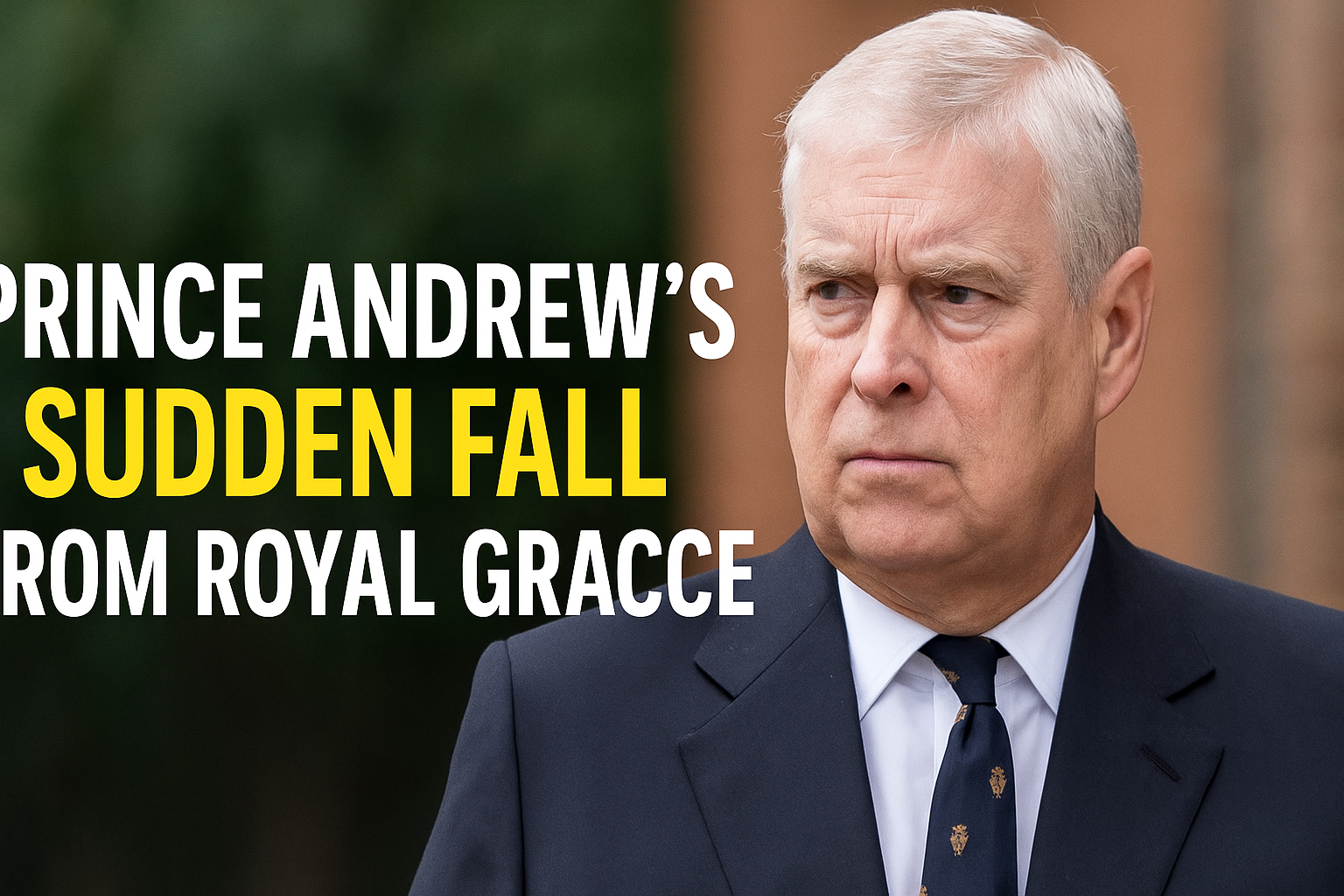
Prince Andrew’s Sudden Fall from Royal Grace
The royal fallout surrounding Prince Andrew has transformed from quiet whispers into undeniable reality. Once among the monarchy’s most visible and confident figures, the Duke of York now finds himself at the center of a remarkable and permanent withdrawal from public life.
For years, Andrew represented a bridge between tradition and modernity within the royal family. Yet, mounting scandals, intense public scrutiny, and decisive actions from the Palace completely dismantled that image.
Today, the official royal website no longer lists his biography. Prince Andrew honorary military titles have been revoked, and his public appearances have disappeared altogether. Although Buckingham Palace has not explicitly declared him expelled, its actions leave no doubt: the Duke of York has been deliberately and comprehensively disowned by the institution he once served. truths about how the Palace disowned Prince Andrew—and how this reshaped the Monarchy’s future.
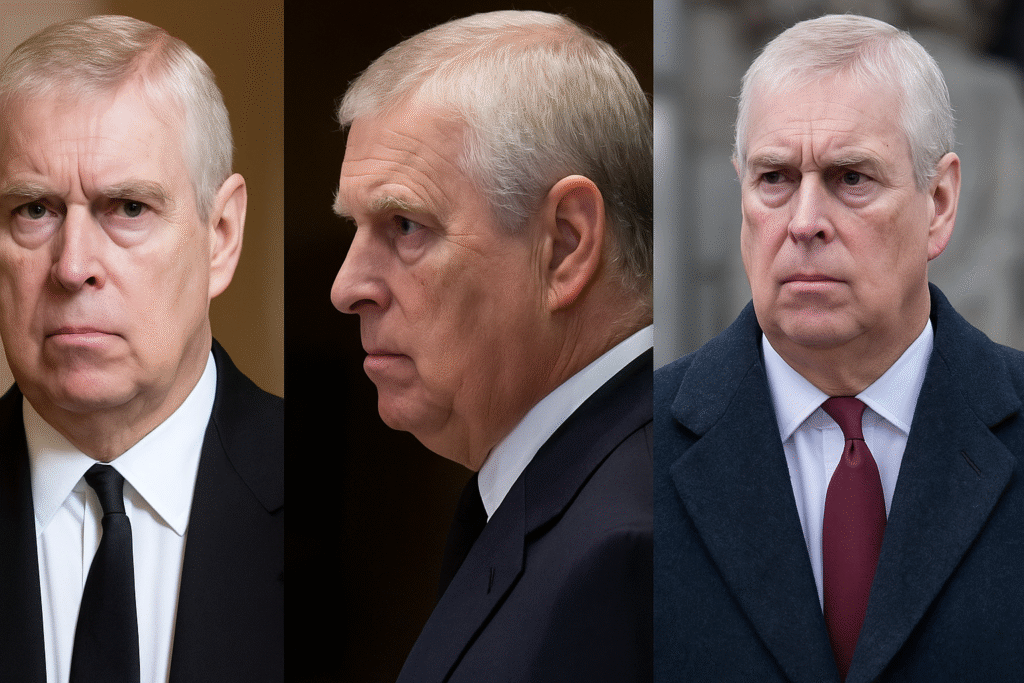
1. Prince Andrew’s Downfall: How It All Finally Unfolded
The decline of Prince Andrew unfolded through deliberate choices rather than sudden collapse. When allegations of misconduct linked him to financier Jeffrey Epstein, the Palace initially maintained silence. As the investigation expanded, public pressure mounted.
At first, Buckingham Palace defended Andrew, emphasizing his cooperation with authorities and denying any wrongdoing. Yet senior aides soon warned that his continued involvement threatened the Monarchy’s credibility.
The turning point came with the BBC Newsnight interview in November 2019. Hoping to restore his reputation, Andrew instead deepened public criticism. His answers appeared defensive and lacked empathy for Epstein’s victims. Outrage surged across the United Kingdom.
Shortly after, the Palace announced that Andrew would step back from public duties “for the foreseeable future.” Though that phrase suggested a pause, those within the Palace already knew the retreat would last permanently.
Furthermore, the decision reflected an institution protecting itself rather than one individual’s choice. Courtiers reassigned his staff, canceled engagements, and froze ongoing projects. By early 2020, Andrew no longer carried out any official role. The Crown had acted decisively to contain the damage, prioritizing its survival over sentiment.
2. Inside the Palace: What Really Happened Behind Closed Doors
Within the Palace, the months after the Newsnight broadcast were turbulent. King Charles III, then Prince of Wales, pushed for swift action to defend the Monarchy’s integrity. Queen Elizabeth II, famous for her devotion to family, initially hesitated. However, once advisers demonstrated the scale of the reputational threat, she approved decisive measures.
Senior officials from the Lord Chamberlain’s Office drafted options ranging from temporary suspension to complete removal. Advisors concluded that partial measures would only prolong the crisis.
Eventually, a consensus formed: Andrew must surrender all royal duties and affiliations. On January 13, 2022, Buckingham Palace released a statement confirming that he had returned his honorary military titles and royal patronages to the Crown.
The announcement read:
“With the Queen’s approval and agreement, the Duke of York’s military affiliations and royal patronages have been returned to Her Majesty. The Duke will continue not to undertake any public duties.”
The brevity of the message spoke volumes. In a single paragraph, the Monarchy redefined Andrew’s status. Furthermore, King Charles and his advisers used that moment to reinforce a new precedent—loyalty to the institution outweighs loyalty to blood.
After this, Andrew ceased representing the Crown entirely. His private life remained his own, but his royal identity no longer carried authority or privilege.
3. Meanwhile, the Royal Website Quietly Changed Everything
While statements dominated news outlets, another quieter signal appeared online: Prince Andrew’s biography vanished from the Royal Family’s official website.
For decades, the site listed every senior royal with detailed pages showcasing their duties and charities. In late 2025, visitors noticed Andrew’s page had disappeared. Only a brief mention remained under historical references, identifying him simply as “Andrew Mountbatten-Windsor, formerly Duke of York.”
Furthermore, his name no longer carried the style “His Royal Highness.” This subtle digital alteration carried deep symbolic meaning. The royal website serves as both an archive and a mirror of hierarchy; when a name disappears, it signals institutional reality, not rumor.
By quietly removing Andrew’s profile, the Palace accomplished two objectives simultaneously. It distanced the royal family from scandal while avoiding public confrontation. The Monarchy chose silence as a strategy—a method that speaks louder than statements.
Consequently, this update became one of the most discussed royal developments of the year. Historians recognized its importance immediately. “The monarchy often communicates through omission,” explained historian Caroline Harris. “When a name vanishes from its official record, that absence becomes the message.”
Thus, the royal household executed one of its most discreet yet definitive acts of disassociation.
4. As a Result, Prince Andrew’s Role Was Completely Erased
Modern royal history rarely shows such comprehensive exclusion. Prince Andrew’s removal reached into every corner of his former life.
As a result, the Palace reassigned all his ceremonial duties. Other royals assumed his positions—most notably, Queen Camilla became Colonel of the Grenadier Guards. The charities that once carried his patronage quickly found new royal supporters.
Event planners stopped including Andrew in official appearances. Public ceremonies no longer reserved seats for him. Invitations to national events never arrived.
Even his residence at Windsor, Royal Lodge, faced review. The Crown Estate, which manages royal properties, began evaluating future uses for the home. The implication was clear: Andrew’s royal privileges were dissolving piece by piece.
Unlike Prince Harry, who created a separate global identity, Andrew built no independent platform. He remains inside royal territory but outside royal function—a presence without participation.
Moreover, these changes revealed an essential principle of Monarchy: the institution will sacrifice any individual to preserve the collective. Each administrative step reaffirmed that principle, ensuring public trust through visible accountability.
In essence, the Crown didn’t merely punish Prince Andrew—it redefined itself by removing him.
5. Ultimately, What Prince Andrew’s Fall Means for the Monarchy
The consequences of Prince Andrew’s disownment extend far beyond one man. His situation marks a generational transformation inside the British Monarchy. King Charles III governs with a clear vision—fewer working royals, greater transparency, and zero tolerance for reputational risk.
Consequently, Andrew’s removal serves as both a warning and an example. The Monarchy’s credibility now depends on integrity rather than inheritance. By excluding him, the institution declared that royal privilege carries responsibility, not immunity.
Furthermore, the handling of his case illustrates how modern royals manage public scrutiny. In earlier eras, controversy might have been hidden or downplayed. Today, strategic transparency replaces secrecy. Quiet decisions, carefully timed releases, and online adjustments allow the Monarchy to shape its narrative while appearing open.
Ultimately, Andrew’s case demonstrates the Monarchy’s adaptability. It balances compassion with pragmatism—acknowledging family loyalty yet prioritizing national confidence. For future generations of royals, his story stands as a guide to what happens when personal conduct collides with public duty.
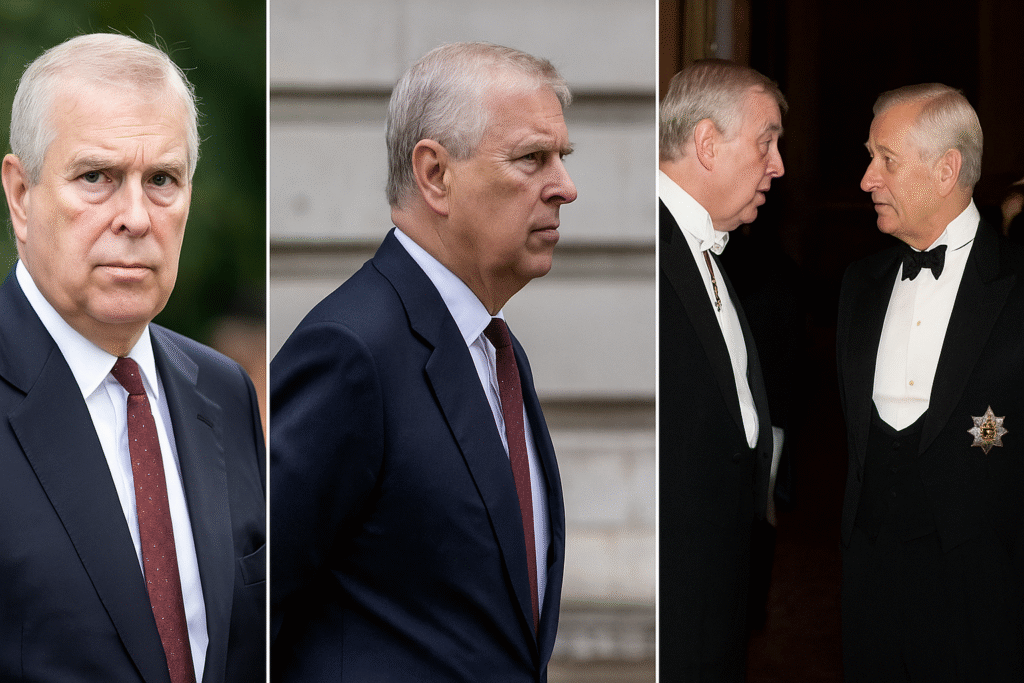
Conclusion — A Family, an Institution, and a Message
The saga of Prince Andrew is not only about disgrace; it’s about evolution. The Monarchy used his fall to reaffirm its endurance. Five deliberate actions—the loss of duties, the return of titles, the reassignment of roles, the quiet erasure from official platforms, and the permanent withdrawal from public life—together formed a silent declaration: tradition cannot shield anyone from accountability.
Moreover, this sequence shows that the Monarchy remains capable of transformation. Where past generations relied on discretion and denial, today’s royal leadership values transparency and control.
Therefore, Prince Andrew’s story reveals both consequence and renewal. His removal, though painful for the family, strengthened the institution. It reminded citizens that the Crown’s purpose is to serve the nation, not itself.
As Britain’s Monarchy steps into a new era under King Charles III, this episode may stand as proof that even ancient systems can evolve. Ultimately, by choosing reform over protection, the Palace preserved the very thing it values most—its survival.
How will Andrew’s titles be removed and what happens next?
“The Royal Family Revealed: 5 of the Most Jaw-Dropping Forbidden Secrets”
About the Author